I’m putting a door on the cave
My amygdalae need a break – both of them!
I’ve been very tired lately and even when I speak to the most energetic of colleagues at work, I often get the answer when I ask, “How are you?” The answer is, “I am fine. I’m just a little tired.”
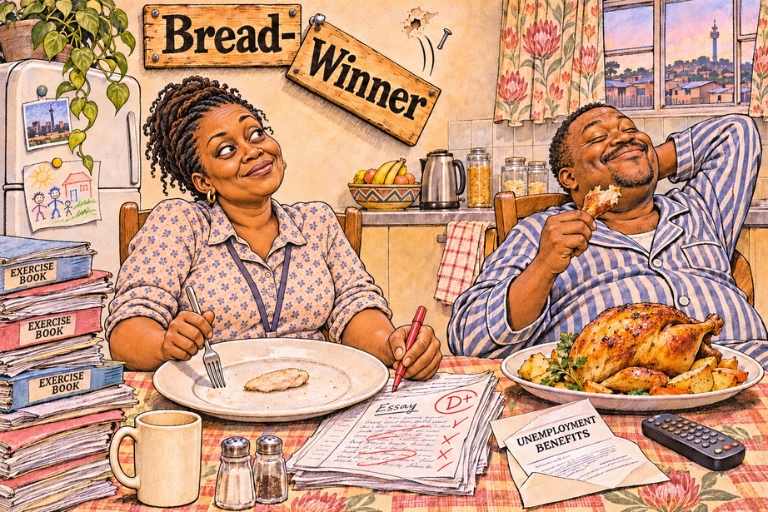
This has become an epidemic in our society, where everybody is constantly craving a break.
When we do take a break, we immediately feel guilty and ashamed because we are “not doing our part” or … we feel like we are not “part of the team” because “good” team members (it seems) work themselves to a standstill.
This hustle culture and the over-energetic career-person archetype have to go.
It is not tenable anymore.
The idea of overworking (and underpaying) has been prevalent in society for decades but, with the advent of social media and constant scrolling, and people being on their screens all day long, there is a new set of neuroses being created by constant overstimulation and exposure to blue light. It’s made worse by masses of superfluous information. The result – people have forgotten how to really rest.
NOTE: The word neurosis is not “PC” anymore. Doctors (aparantly) rarely use the term as a formal diagnosis, replacing it with specific conditions such as anxiety, depressive, and obsessive-compulsive disorders. This renaming smells like more guilt to me. More shame.
I am not disabled or ill – I am exhausted!
And I need a holiday. Give a one month off, and let me show you who I really am when I come back. Unfortunately I will probably use 2 weeks sorting out my car, house, licenses, taxes and one small corner of that room we used to use as a “study”, which has now become a storeroom where creative projects go to die!
Our current idea of relaxing is with us lying on the couch, with the tablet on your stomach, the phone in your left, and the TV in the background, and somebody doing something on their laptop next to you on the couch. It is just impossible to have a conversation. People are not paying attention. Nobody’s listening, everybody’s scrolling, and at the end of the day, between all this noise and the soup of information being poured into our throats, there’s no quality of experience.
I can hardly watch a series.
In fact – I can’t even sit through a whole episode on Netflix anymore. My favorite thing to do now is to watch a YouTube episode where somebody fixes a car and there are no words being spoken. I find it very soothing to watch someone paint a watercolor painting without commenting and no music either.
I am probably getting older and being a Gen-X makes it “worse” but I think I’m not the only one.
This idea of being “into rested(ness) gives new meaning to “sleeping on the job” (as a good thing!) — it is not about being lazy or quietly quitting, and it is not about lack of interest either. It is about breaking the pattern of what I call “approved exhaustion” or “tired but proud.”
The whole concept of being physically, mentally, emotionally and spiritually drained has become desirable as some warped badge of honour, as if we are soldiers who have returned from the battlefield — bloodied and full of “guts and glory.”
The truth is that soldiers do not see any heroism in that condition.
They see death and destruction, mayhem and murder. The modern-day hero is a peaceful, non-violent, gentle and deeply spiritual person who prioritises rest, reflection and meditation above hyper-activity, hustle-culture, and the “less-is-more” myth when it comes to relaxation.
Minimalism is a very fashionable concept these days, but it is not applicable when it comes to sleep. You do not get stronger, clearer or more alive by rationing the very thing that restores you. Sleep is not a luxury to be minimised; it is the foundation everything else stands on.
Living in a LOW-fat world
In a low-fat world where butter and meat and eggs and the skin on the chicken have been demonised for decades, the truth that sugar is now added to almost every conceivable consumable product on earth has not fully hit home yet.
Studies looking at packaged foods in places like Canada and Australia have found added sugars in roughly two-thirds of the products on supermarket shelves — often in things that do not taste particularly sweet.
The low-fat reformulation wave frequently replaced flavour and satiety with sugar and refined carbohydrates, and the average person still consumes far more added sugar than public-health guidelines suggest is wise. That pattern contributes to the very fatigue and metabolic drag that make rest feel even harder to claim.
The fact that cholesterol is essential for a healthy nervous system — and for the structural integrity of every cell — is still treated as almost heretical in some circles. The brain alone holds roughly a fifth of the body’s cholesterol, most of it locked into the myelin that insulates nerves so signals can travel.
The body synthesises most of what it needs for cell membranes, hormones, vitamin D and bile. Mainstream cardiology continues to flag elevated LDL as a risk factor for cardiovascular disease, and the debate over dietary cholesterol versus saturated fat, inflammation and overall pattern remains live.
What has been less carefully discussed is the absolute quality of the earlier demonisation: the substance itself was framed as the enemy rather than as a necessary molecule whose blood levels and context matter.
Salt has also been demonised.
Major guidelines still recommend limiting sodium because higher intakes raise blood pressure in many people, yet observational data have sometimes shown higher risk at the very low end as well, and the practical result for many has been a broad cultural suspicion of salt that does not always distinguish between heavily processed food and ordinary seasoning of real meals.
It’s all upside-down now.
Privacy equals isolation; solitude is loneliness. And so has rest now become a guilty pleasure — as if we are cheating on our partners when we want to take a nap.
And oh! … the shame of saying no to people who are inviting you for a social and you do not feel like it. And then there is the snubbing that follows.
The same culture that treats visible exhaustion as proof of seriousness treats the desire to stop as a kind of moral failure. Hustle culture has made busyness a status signal and burnout a badge; research linking very long working hours to higher risks of stroke and heart disease sits alongside the everyday experience of people who feel they must apologise for needing sleep.
It all has to stop — people need to rest. Jim Carrey famously said that he dealt with his depression by changing the word “depressed” to “deep rest.” In the interview he credited the spiritual teacher Jeff Foster for the reframing: depression as the body saying it no longer wants to hold up the avatar or character you have been trying to play, and that the body needs deep rest from that role.
The idea has travelled widely because it names something many people recognise — the exhaustion of performing a version of yourself that has become too heavy. And I say, and you can quote me, that sleep is holy.
That is my biggest dream, pun intended.
If you ask me what my biggest dream is, I will say it plainly: I want to live a life where I wake up when I have finished sleeping as opposed to being woken up by three alarm clocks (yes, three!).
“Into-rested” is the opposite of approved exhaustion. It is the refusal to treat depletion as virtue, the choice to let sleep finish its work, and the quiet insistence that rest is not the opposite of a meaningful life but one of its conditions. The soldier does not need more glory. The modern hero needs enough quiet to remain whole. Sleep is not the interruption. It is the return.
Sorry, too tired to write a conclusion.
Read all about my “tiredness book” by joining my newsletter. I will tell you all about it. Just quickly taking a nap, if that’s okay with you.
Leave a Reply